The 'Big Bang' in Your Chest: Why Heart Palpitations Can Actually Be a Sign of a Healthy Heart
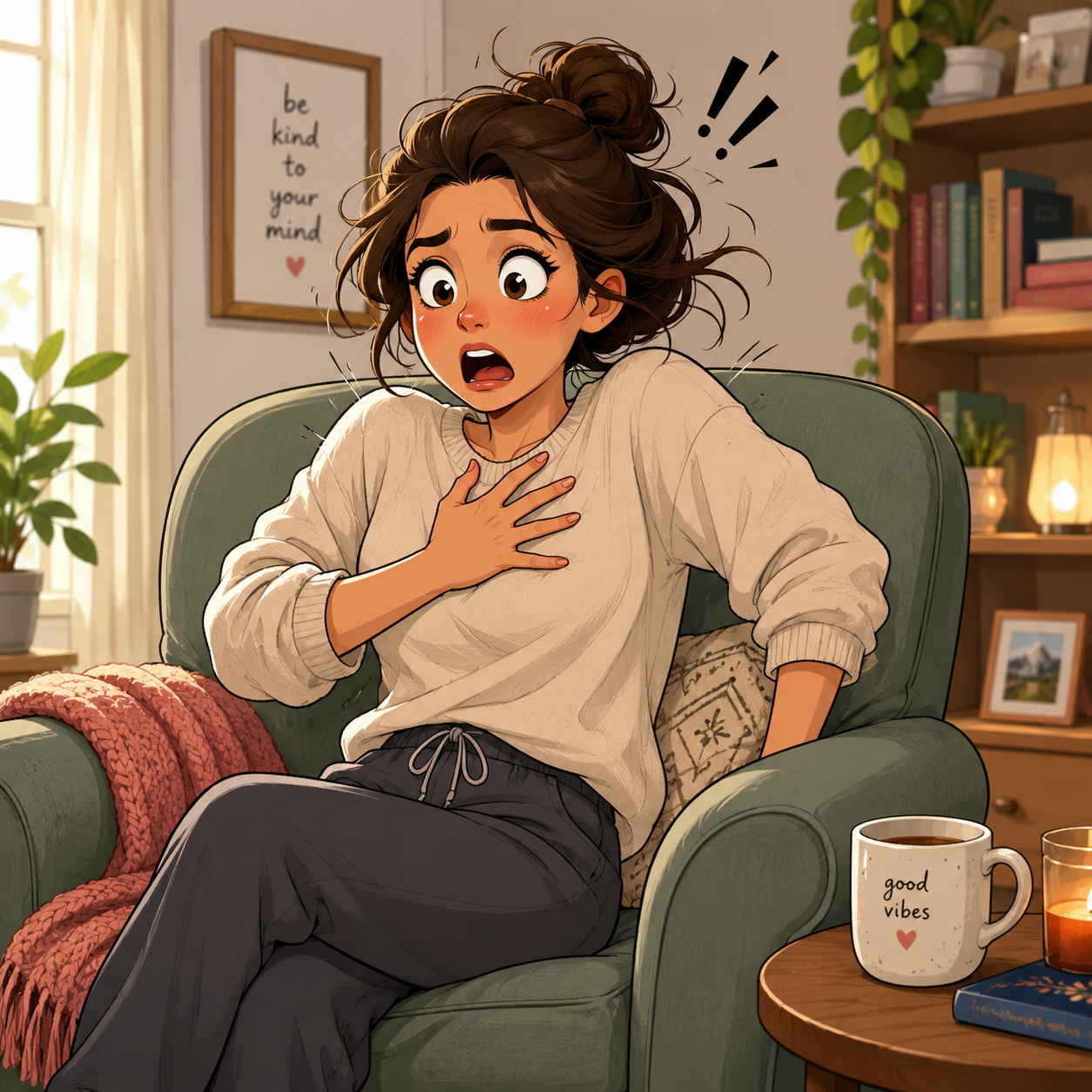
just skipped a beat…
You are sitting quietly when it happens: a sudden thump in your chest that feels like a bass drum being kicked. Your breath catches, your adrenaline spikes, and your mind immediately races to the worst-case scenario. Is this a heart attack? Why did it skip a beat?
In the Emergency Department, we see thousands of people every year with this exact complaint. They’ve had the ECGs, the blood tests, and the specialist referrals, only to be told their heart is "fine." Yet, the "Big Bang" in their chest feels anything but fine.
It feels dangerous. It feels broken.
But here is the truth that modern neuroscience and cardiology want you to know: That "Big Bang" isn't a sign of a weak heart. In fact, it is often a sign of a healthy, robust heart doing exactly what it was designed to do in response to stress.
Let’s decode the mystery of the "skipped beat" and turn that confusion into clarity.
The Anatomy of a "Skipped" Beat
First, let’s clear up a common misconception: your heart didn’t actually skip a beat. What you experienced was most likely a premature beat: what doctors call a PAC (Premature Atrial Contraction) or a PVC (Premature Ventricular Contraction).
Think of your heart as a highly disciplined orchestra. Usually, the "conductor" (the sinoatrial node) sets a steady, rhythmic pace. But every now and then, an "extra" beat fires off early from a different part of the heart.
Why does this happen? Often, it’s because of stress hormones. When you are stressed, anxious, or overtired, your blood is swimming with adrenaline and cortisol. These chemicals make the cells in your heart more "irritable" or "excitable." They are primed to fire, and sometimes they fire just a fraction of a second too early.
These premature beats are normal. They happen to almost everyone. But if these symptoms, or any other symptoms, are new, changing, or getting worse, always seek medical help to make sure the palpitation really is a premature beat and not something different. But if they are normal, why do they feel so violent?

The Soldier Analogy: Jumping Back into Rhythm
To understand the "Big Bang," we have to understand how a healthy heart resets itself. To do this, I like to use the Soldier Analogy.
Imagine a company of soldiers marching in perfect rhythm. Left, right, left, right.
Suddenly, one soldier in the middle of the pack gets distracted and takes a small, quick, premature step. He’s out of sync. To avoid tripping the person in front of him and to get back in time with the rest of the company, he has to do something very specific:
- He takes a tiny, awkward half-step (the premature beat).
- He pauses for a split second to wait for the next beat of the drum.
- He jumps slightly to land his foot exactly when the rest of the company lands theirs.
When your heart has a premature beat, it does the exact same thing. It fires early, realizes it’s out of sync with the body’s natural rhythm, and pauses to wait for the next "official" signal. This is called the compensatory pause.

Why the "Bang" is Actually Healthy
This is where the fear usually sets in. During that "compensatory pause," it feels like your heart has stopped. You feel a void in your chest.
But during that tiny pause, something remarkable is happening.
Because the heart waited a fraction of a second longer than usual before the next beat, it had more time to fill with blood. A healthy, elastic heart uses this extra time to expand further, taking in a larger volume of blood than it does during a normal beat.
When the next signal finally arrives, the heart doesn't just tap: it pumps. Following what scientists call the Frank-Starling Law, the extra stretch of the heart muscle results in a much more powerful contraction.
That "Big Bang" or "thump" you feel is simply the sensation of a very full, very healthy heart successfully pumping out that extra volume of blood.
It’s not a sign of failure; it’s a sign of rebound power. Your heart recognized a tiny timing error and corrected it with a masterclass in physiological efficiency. If your heart were weak or failing, it wouldn't be able to produce that strong, forceful "bang."
Why Stress Makes it Feel Louder
If these beats are normal, why are you noticing them so much more lately? The answer lies in the mind-body connection.
When you are in a state of chronic stress or "High Alert," your brain’s "volume knob" for internal sensations is turned all the way up. This is called interoception. Normally, your brain filters out the sound of your own heart. But when you are anxious, your nervous system decides that every internal sensation is a potential threat.
You aren't just having palpitations; you are hyper-aware of them. The adrenaline that caused the premature beat in the first place also makes your chest muscles tighter and your nerves more sensitive, making that "bang" feel like an explosion.
Turning Confusion into Clarity
Understanding the "Big Bang" is the first step toward relief. When you realize that the thump in your chest is actually a sign of your heart's resilience and health, the fear begins to dissolve. And when the fear dissolves, the stress hormones level out, which: ironically: makes the premature beats happen less often.
However, knowing the science is often only half the battle. If you are caught in a cycle of "medically unexplained symptoms," you need practical tools to calm your nervous system and retrain your brain to stop viewing these sensations as threats.
Your Next Steps to Relief:
- Decode the System: If you want to dive deeper into how stress creates real physical symptoms: from palpitations to gut issues: my book "Undiagnosed" provides the full roadmap. It’s written from the perspective of an emergency doctor who sees these symptoms every day.
- The 3-Hour Reset: Our online course, "Undiagnosed" (available on our site and Udemy), offers 12 guided videos with practical breathing resets, relaxation techniques, and pacing strategies to help you manage the physical symptoms of anxiety.
- Trust the Rhythm: Next time you feel that "thump," try to visualize the soldier. Smile and think, "That’s just my heart jumping back into rhythm."

Hope, Not Hype
You are not "crazy," and it isn't "all in your head." The sensations you feel are 100% real, biological, and measurable. But they are also explainable and, in the vast majority of cases, entirely safe.
By moving from a mindset of dismissal ("It's just anxiety") to a mindset of diagnosis ("My heart is resetting its rhythm after a stress-induced premature beat"), you reclaim power over your body.
Start here. Act fast to lower your stress. And remember: a big thump is just a big sign of a healthy heart doing its job.
Are you a clinician? Learn how to communicate these concepts to your patients without sounding dismissive. Join our Journal Club for the latest research on psychosomatic medicine and assessment tools for functional symptoms.

